
 At establishing the club we chose the name of our club to be Scythia Minor because it is directly related to where the club was founded Dobrich city.The present Dobrogea area is the modern successor of the ancient province of Scythia Minor
Greek Μικρά Σκυθία is the ancient name of modern Dobrogea. Territory is bounded by the Danube Delta and it is a natural extension of the North Pontic steppe area inhabited by Scythian tribes.
Griffin is a symbol of the Scythians as it was believed that he is the guardian of Scythian treasures. It is believed that the griffin inhabited the steppes of Scythia, ranging from modern Ukraine to central Asia, there was abounded with gold and precious stones.
The oldest settled population, proven by archeology, this is from the late Neolithic period. Ancient inhabitants of Dobrogea are those who created the first processed gold in Europe, found in the Varna Necropolis.
They built the inportant for European culture settlement discovered on the island in Durankoulak lagoon. Later,with them are mixed northern equestrian nations and ethnic groups form the Thracians from whom Dobrogea was inhabited mainly Gath tribes.
At the time of Greek colonization VI-th century BC. Greeks established reference points along the Black Sea and founded a colony, the most significant among them north of Odesos (Varna) are: Dionisiopol (Balchik),and Tommy (Constanta).
In V-th century BC. in entering Scythians and then the Sarmatians, Kimmerians and Celts in 513 BC From that area passes campaigns of the Persians against Scythia. After mastering the Dobrogea by the Scythians, it became known as Scythia Minor (Μικρά Σκυθία, Scythia Minor).
In ancient times the area was part of the most significant Thracian state - The Odrysian kingdom.
Professor Dr. Dimitar Draganov
Coinage of Scythian kings is one of the most mysterious in the West Pontic areal. According to Herodotus in 496 BC Skitite taken military offensive in the south reaching Gallipoli peninsula passes Danube Scythians began the first formal negotiations with Odrysian kings secured by the conclusion of dynastic marriages. At the beginning of the first century AD the geographer Strabo mentions that state formation in the region was known as "Little Scythia."
It is known to us the names of these mysterious Scythian kings that ruled in present Dobrogea: Atey, Kanit, Tanuza, Ellis Harasp, Akroza and Sariak.From them only Atey, is a contemporary of the Macedonian king Philip II 359-336 BC)he is discussed in the writings of ancient authors. The only reliable evidence of the other 6 kings is from numismatic material and it is on the ancient Greek language.
In I-st century BC. province is conquered by the Romans (who include them in province of Moesia and then split in to- Lower Moesia and Scythia Minor) as part of the Roman Empire.
The name of the province is used from the 2nd century BC to the founding of Danubian Bulgaria.
During the time of the reforms of Diocletian 297 AD, the province was separate as a Scythia Minor.
Stavry Topalov for Scythia Minor.
71-72 Marcus Lucullus defeated the Pontic troops and forces them out of the West Pontic coast.
He laid siege to and robbed Apollonia for edification of other western Pontic cities that do not provide further armed resistance. In the area surrounding north of Odesos cities are bordering Getty, Scythians and Bastari that were considered free and were hostile to Rome. (Blatavskaya)
In 62 BC for Vice of Rome in Macedonia was appointed Guy Hybrida to him were given under control separate territories in Thrace. In 62-61 BC Gay Hybrida overwinters in Dionisopol and possibly attempt to receive funds from the West Pontic cities outside Rome arrangements.
This creates an armed conflict between united forces of the towns of the region and the local tribes. Roman armies were defeated by Bastari and other united tribes near Istria by which was lost the last achieved Roman success by Mark Lucullus in the area.
At the same time Burebista completed the unification of Gath tribes on both sides of the Danube.
46 BC Odesos and other western Pontic cities lost their autonomy and become from part of the Thracian kingdom into a Roman province.
Scythians have left much evidence of their presence in today's Dobrogea: ancient buildings, frescoes in the tombs, statues, coins, jewelry and more.


PERSIAN RESTORATION
Persepolis club presented photo section, re-enacting the Late Archaic Period dedicated to Persian history on Balkan peninsular.
Tomis Ancient Festival 2017
We all spend great time together due to the reenactment event Marathon 30th October 2015.
Since we start back from Marathon to Bulgaria me and my twin brother we start to plane ways to improve vision of our re-enacting group.
Our short video dedicated to this historian celebration.
We’ve been lucky having chance to present our new Association branch in Tomis Ancient Festival 2017.
By expiries we already know that it is hard to re-reenact two different historian periods through one festival no matter how long is the festival event. It is complicated dealing with large quantity of equipment because we are traveling without supporting tuck but only with a coach bus. It is delicate matter dealing with people who participate as re-enactors because first they are not professional actors and they don’t receive any payment. Second it is stressful for the leaders of the club, just for laterally half hour to set the targets spreading the equipment to everyone, and to arrange all different roles that have to be presented from re-enactors in just a few minutes.
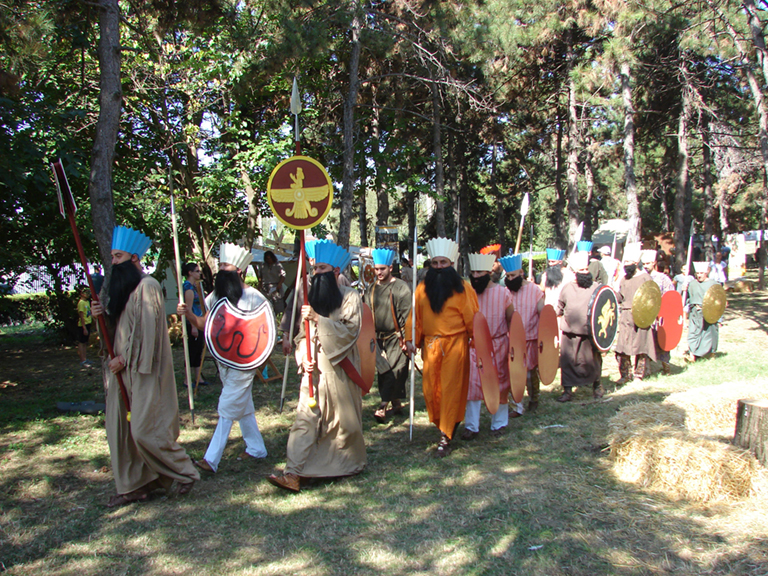
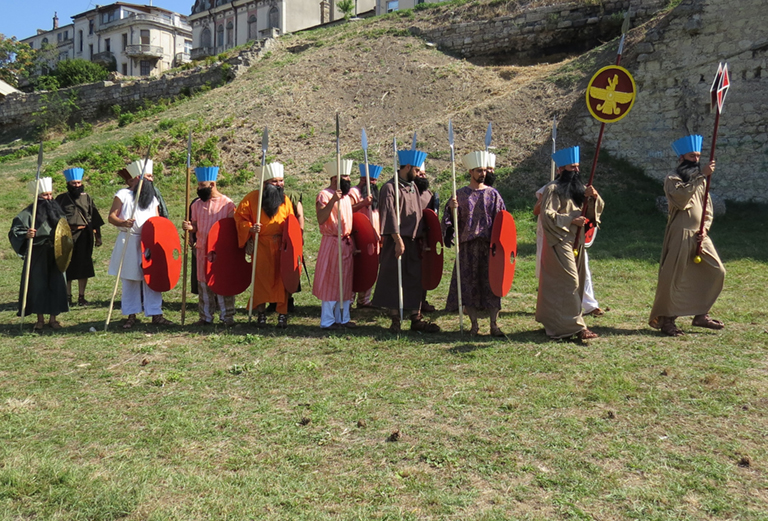
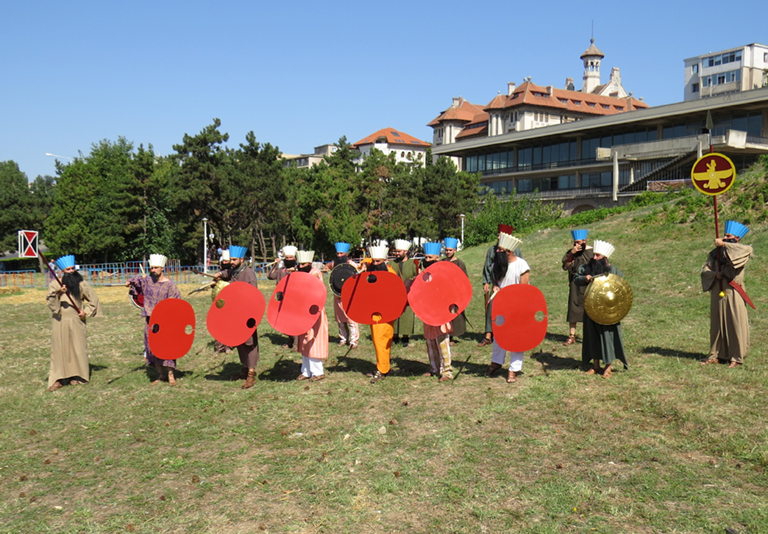
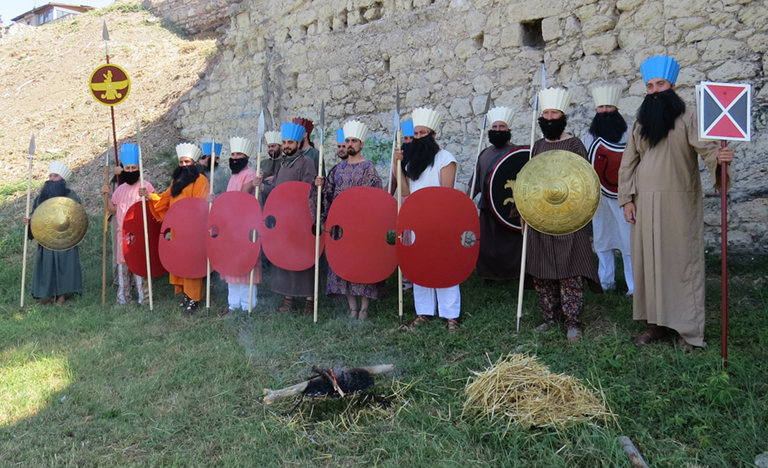
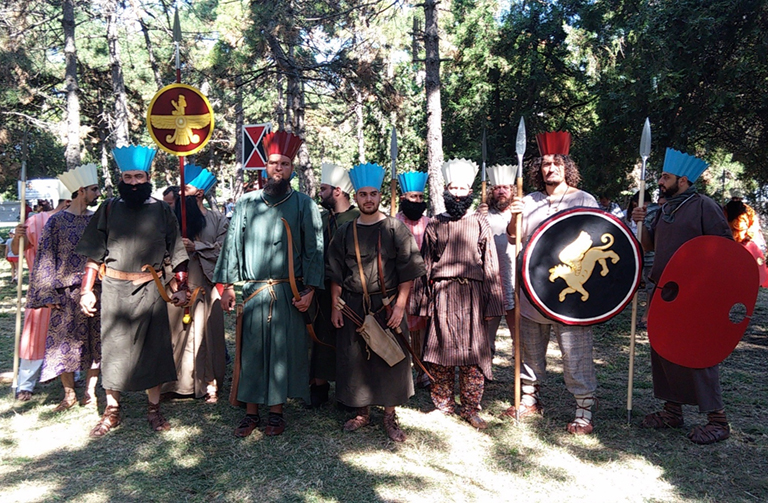
Town of Constanța in Romania was perfect place for this First Living History Step because this town is so ancient-known as Tomis (Greek: Κωνστάντζα or Κωνστάντια)
According to Jordanes (after Cassiodorus), the foundation of the city was ascribed to Tomyris the queen of the Massagetae (The origin and deeds of the Goths): She comes to this Scythian village and settle a new town after her victory over the Cyrus the Great.
Tomyris (/ˈtoʊmɪrɪs/; from Eastern Iranian: تهمرییش Tahm-Rayiš), also called Thomyris, Tomris, Tomiride, or Queen Tomiri, was a Massagetean ruler who reigned over the Massagetae, a Scythian pastoral-nomadic confederation of Central Asia east of the Caspian Sea, in parts of modern-day Turkmenistan, Afghanistan, western Uzbekistan, and southern Kazakhstan. Tomyris led her armies to defend against an attack by Cyrus the Great of the Achaemenid Empire, and defeated and killed him in 530 BC (although this is debatable since Herodotus mentions that this was only one of many stories relating Cyrus the Great's death).
Tomyris is mentioned by several ancient writers, among whom the first is Herodotus. She is also mentioned by Strabo, Polyaenus, Cassiodorus, and Jordanes.
For more information en.wikipedia.org
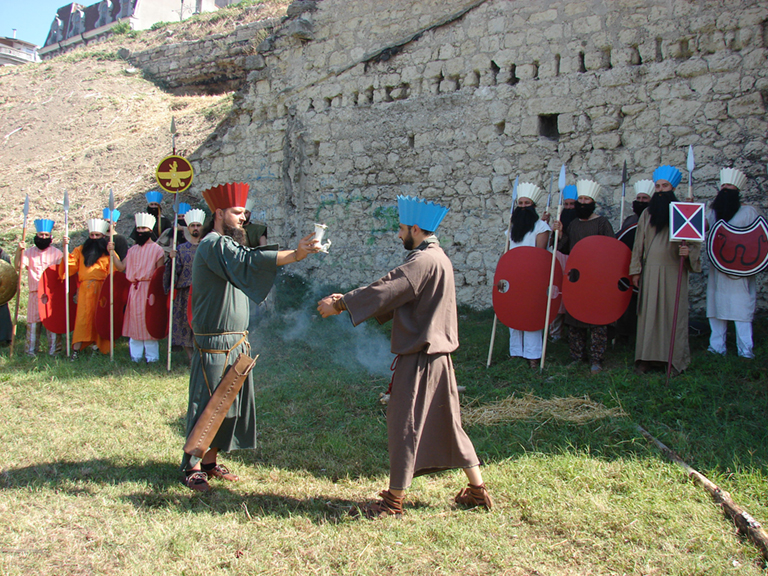
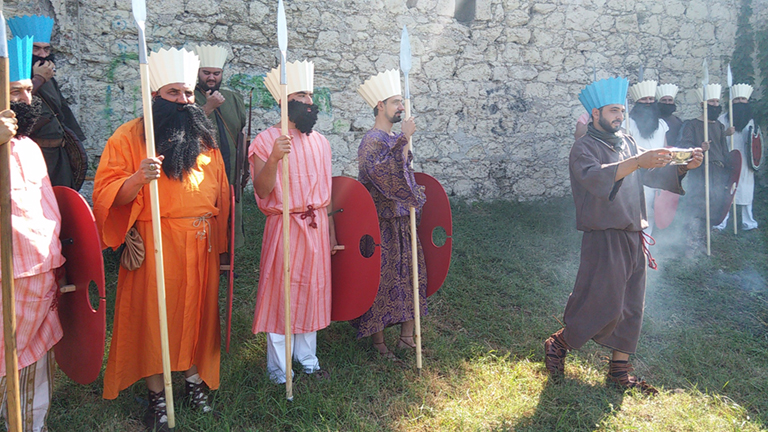
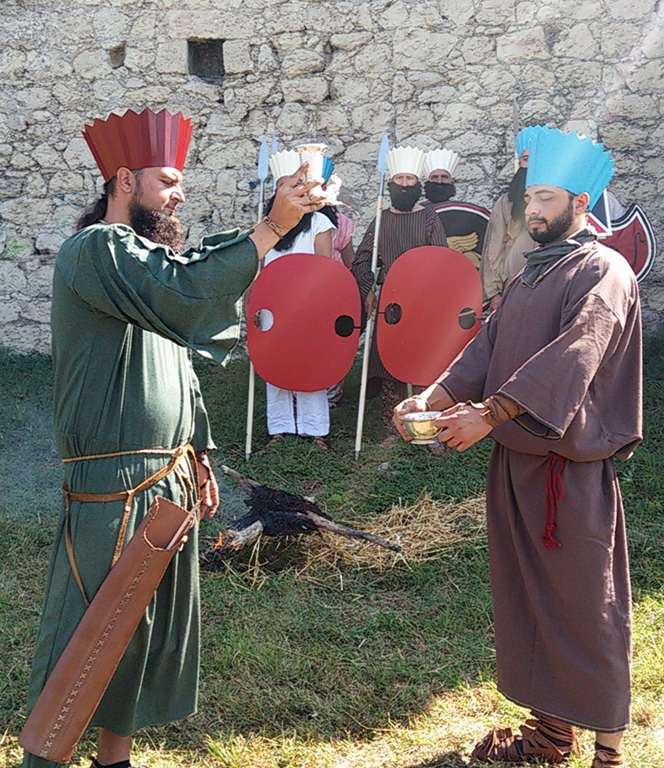
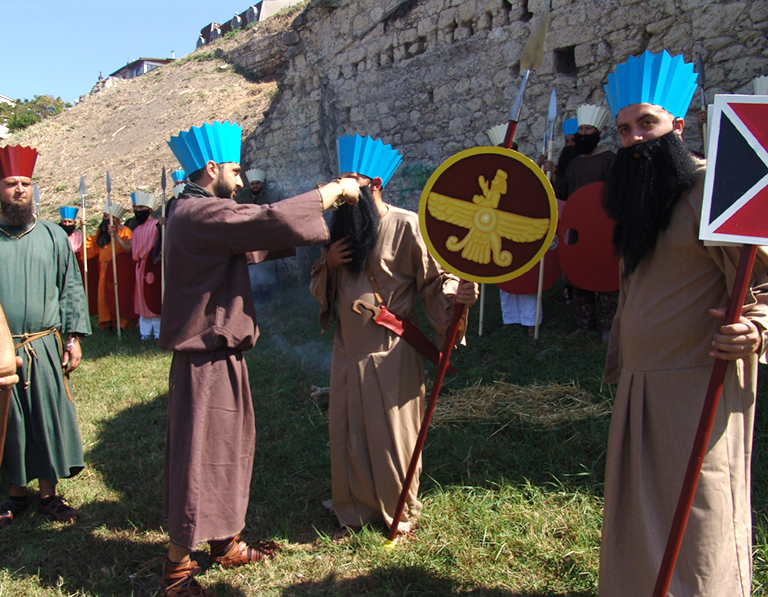
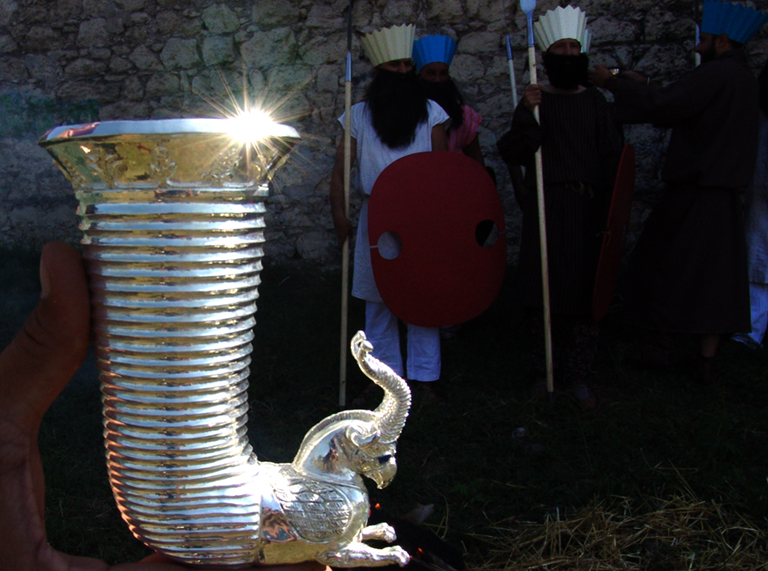
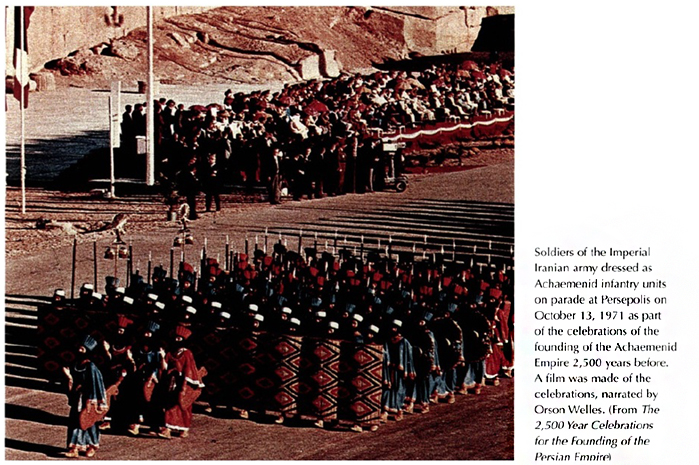
An old event photo which seams so attractive to us all! More then 46 years later it’s very hard to keep up to these high level standards without having any supports.
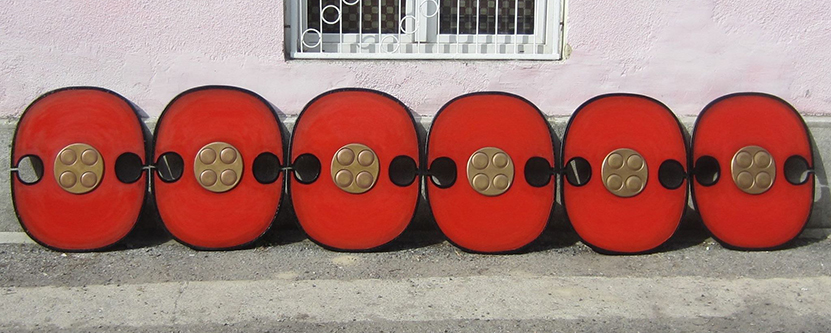
After one year we complete working over our six realistic looking Persian re-enacting shields made from natural materials wood, leather and metalized umbos.
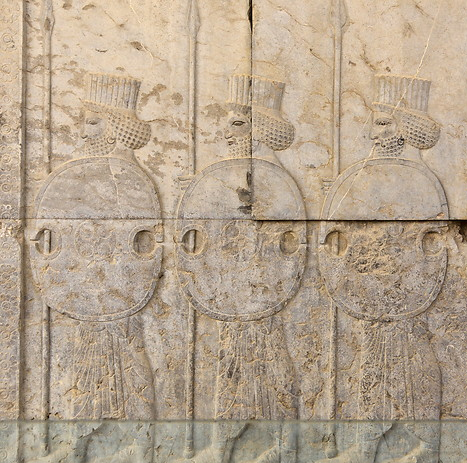
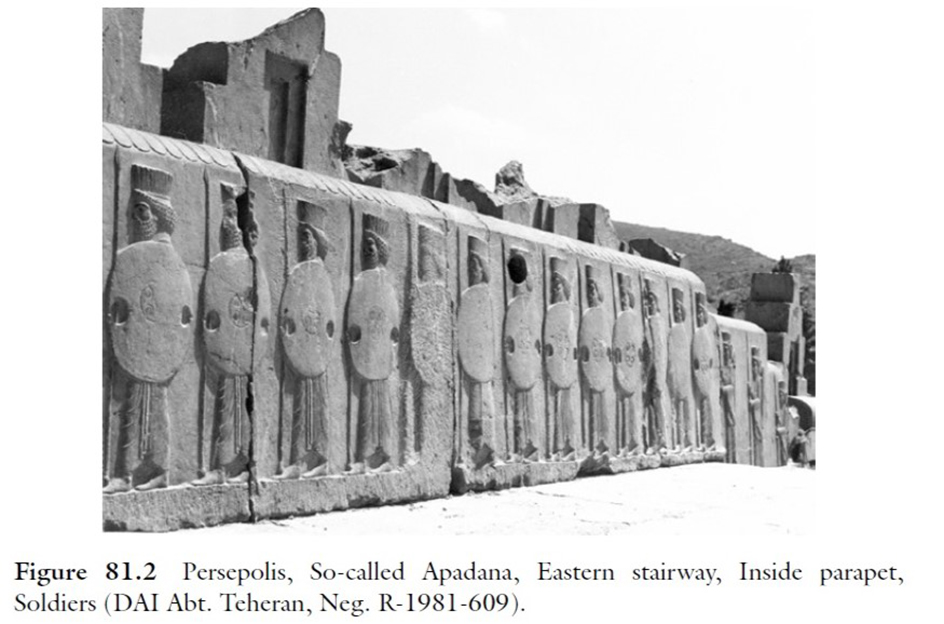
2022 We achieve the order of 11 Achaemenid period Dipylon shield in our Association store. (10) Infantryman Persian soldiers plus (1) commander –all eleven of them looking in the same way. Style is inspired, and taken from the Apadana palace bas- Mede and Persian soldiers reliefs. Iran - Persepolis - Eastern stairs - central wall. Only natural materials been used wood and leather.
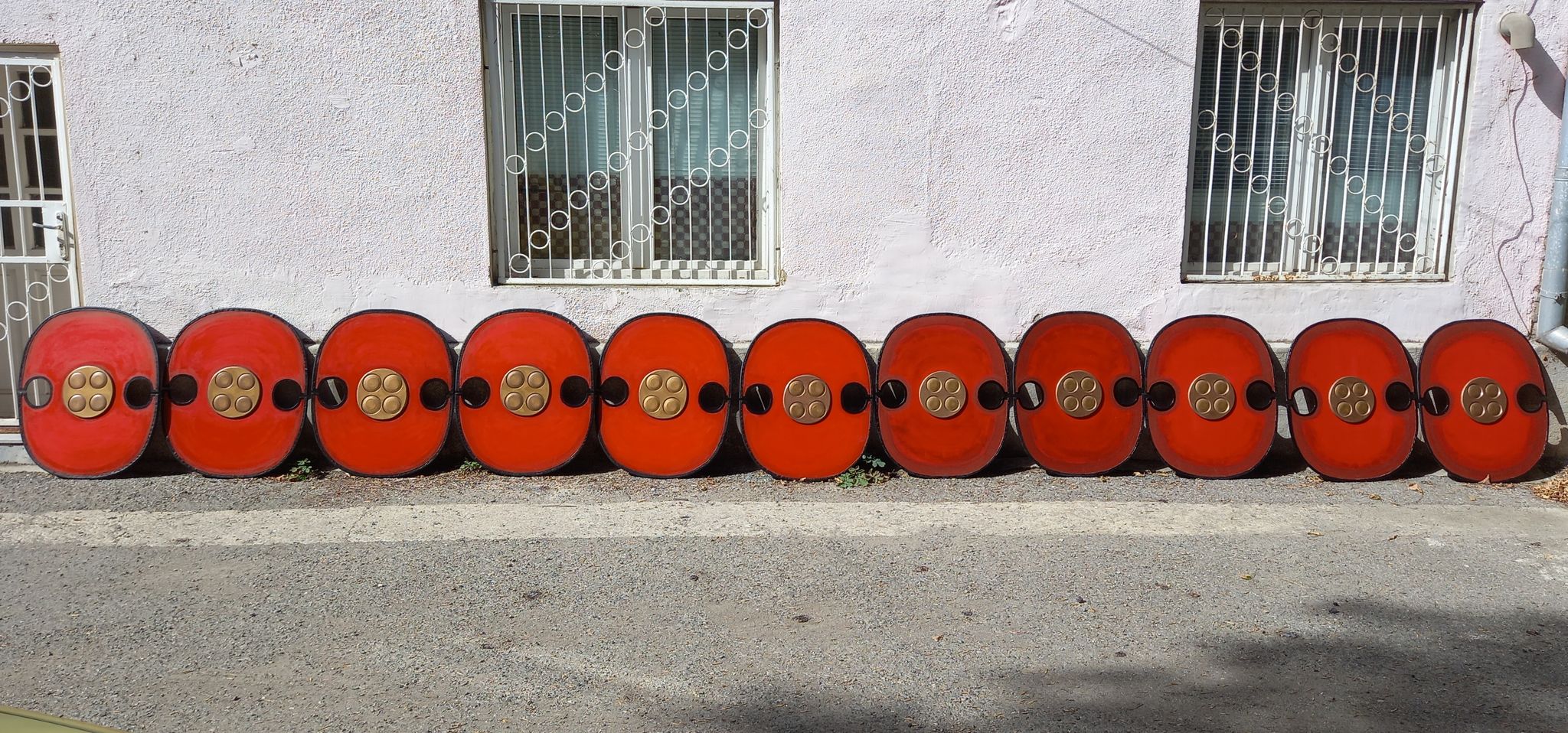
February 2024
We complete the vision of our Persian army battle order -Arštibara in Persian - or Melophoroi, “apple-bearers” in Greek.
Persepolis, So‐called Apadana, Eastern stairway, Inside parapet,Soldiers.
References
A Companion to the Achaemenid Persian Empire, 2 V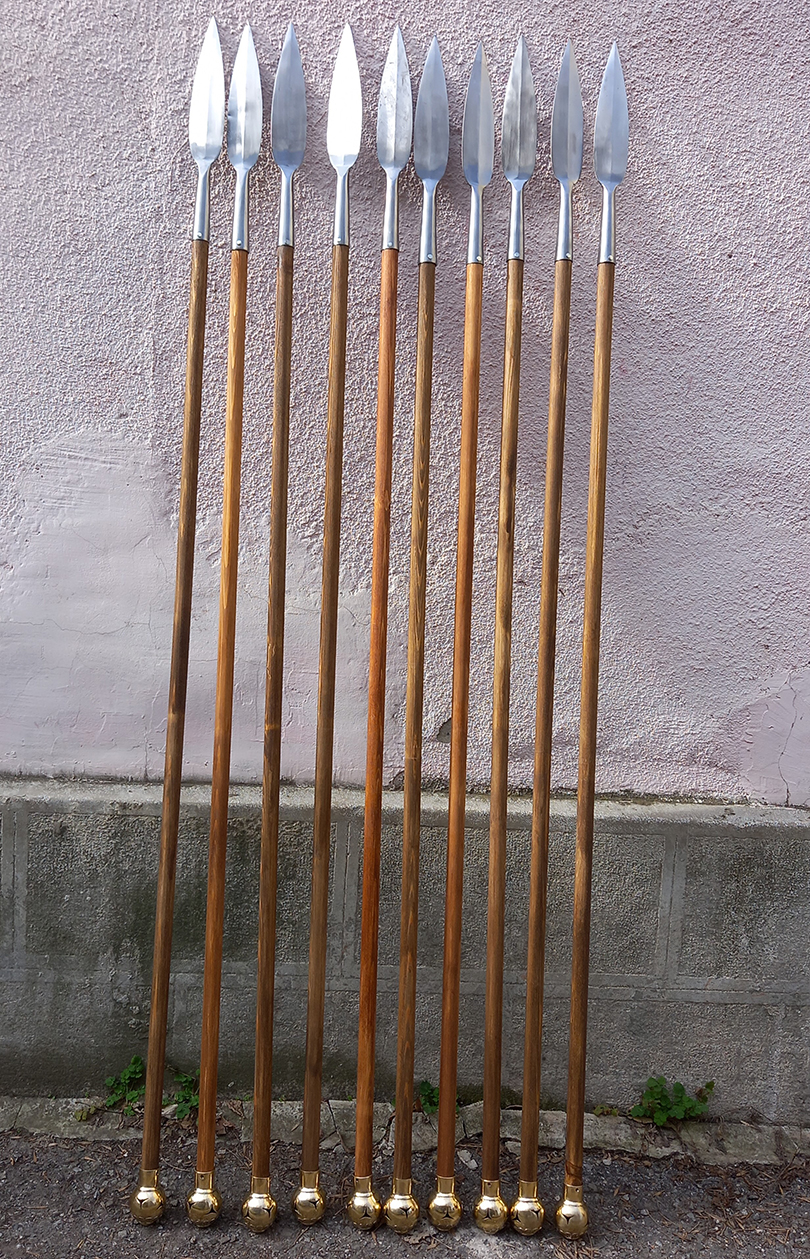
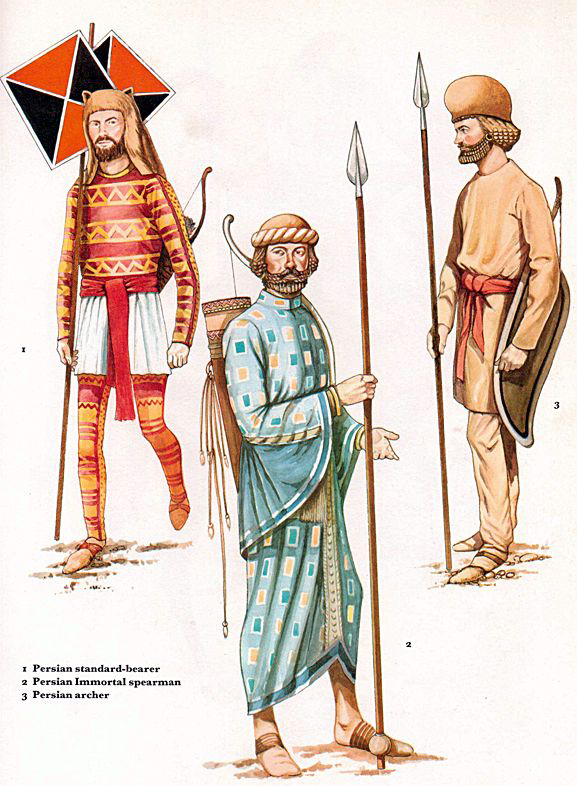
The battle order is presenting a small Persian army of more than 10 equally looking infantrymen and 2 standard-bearers. Not counting archers and satrap auxiliaries.
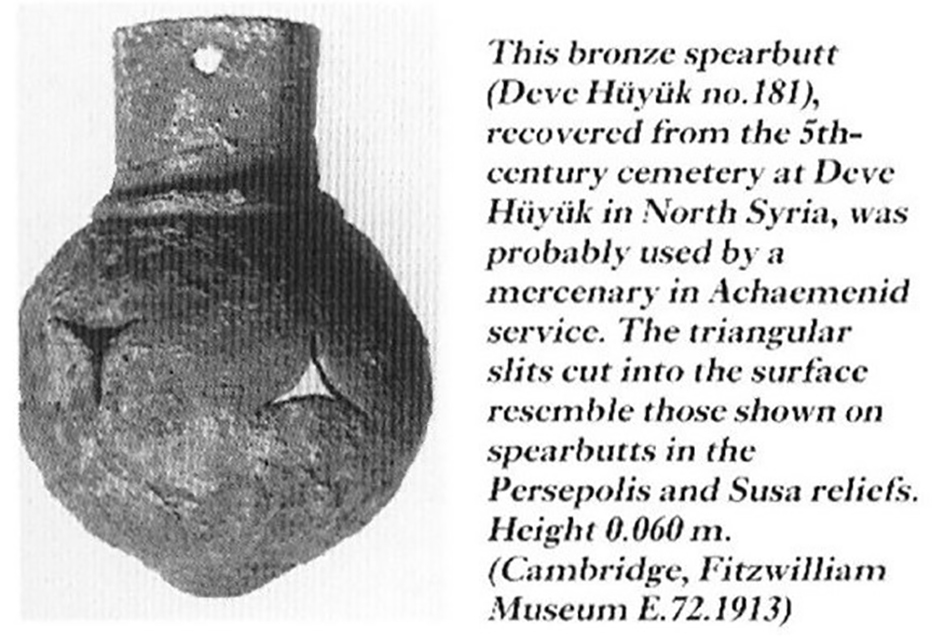
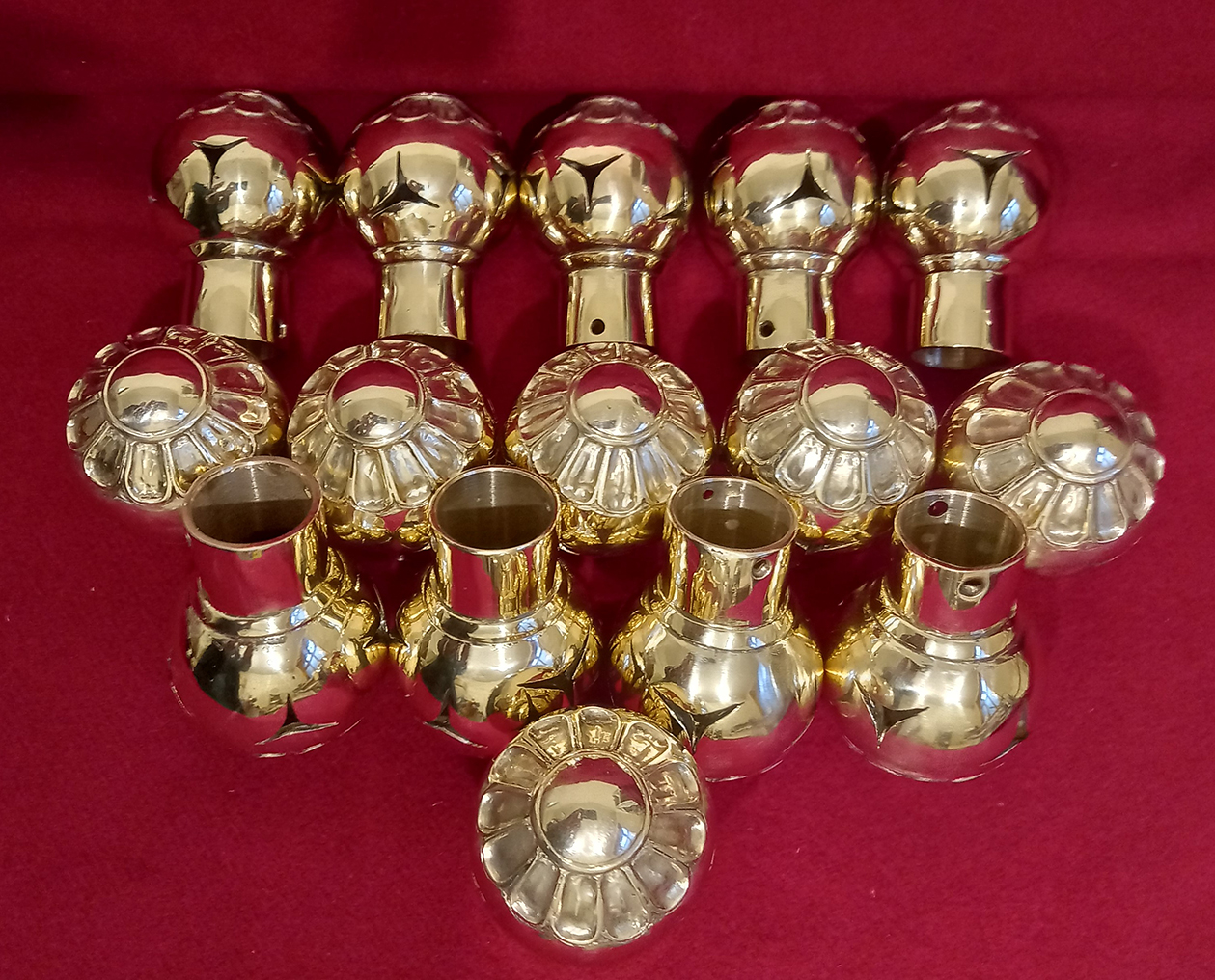
Step by step we work hard in other to achieve our dream producing replica of Persian Bronze spear butt Achaemenid period 5th century cemetery at Deve Huyuk in north Syria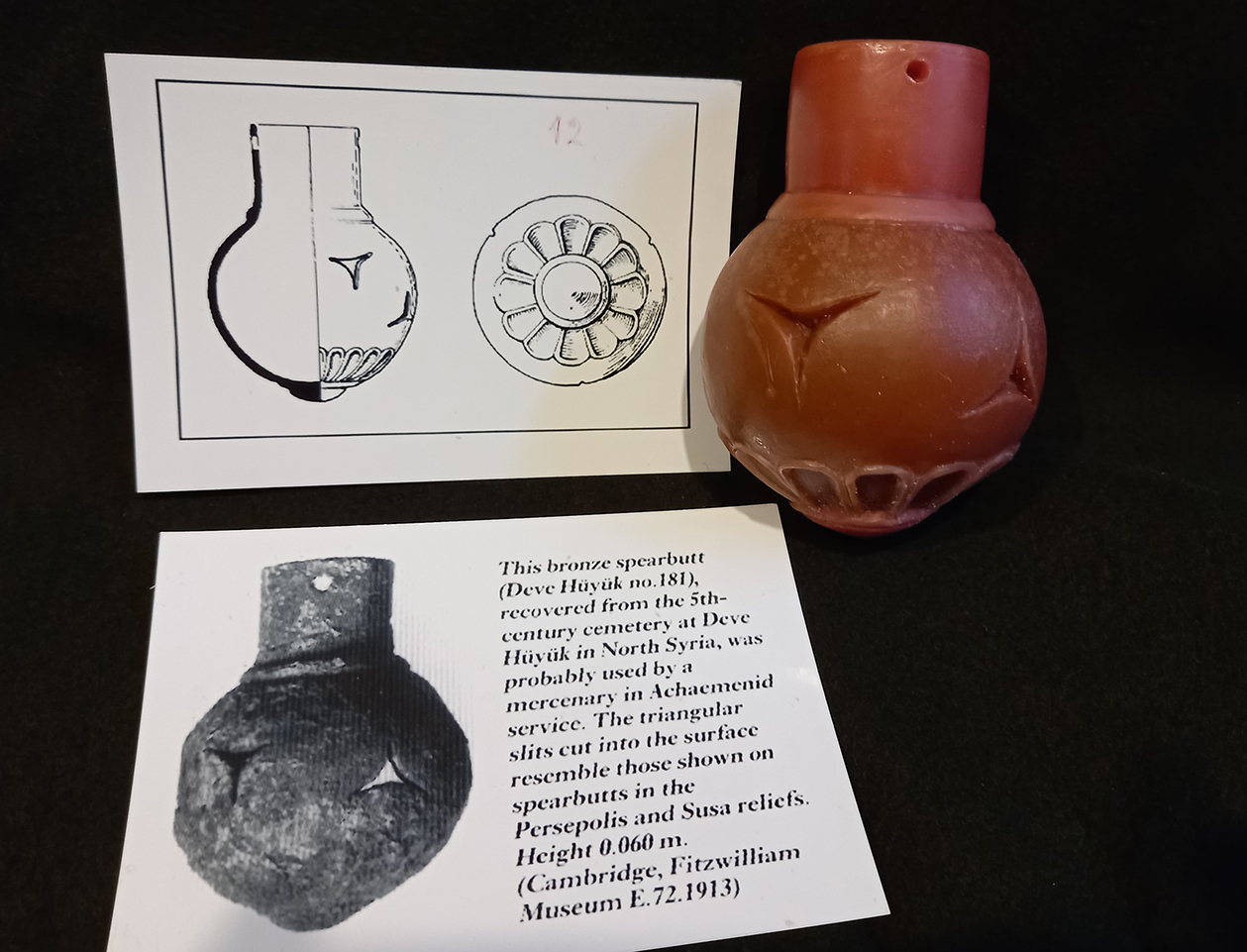
References
Osprey Elite series 42 -N.Secunda, S.Chew - The Persian Army 560-330 BC
Hand making wax work took us a long time but we are happy with the final result.
Note that the number of the petals must be not more, no less but exactly 12 in number.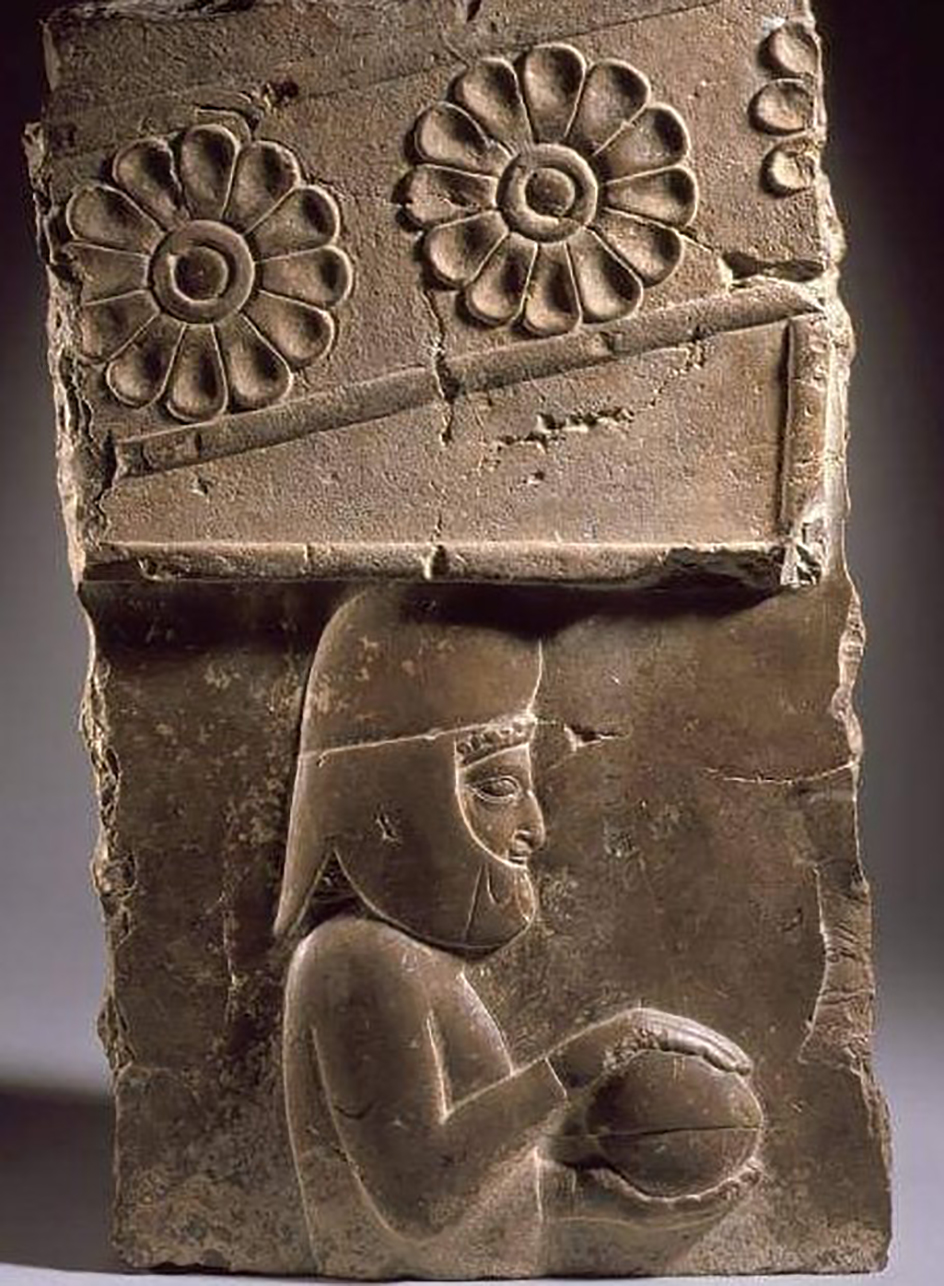
Gift Bearer from Persepolis, Southern Iran (Persepolis)500–450 B.C.Los Angeles County Museum of Art.
We managed to multiply 15 wax Persian spear butts, and they are ready now to be cast by brass.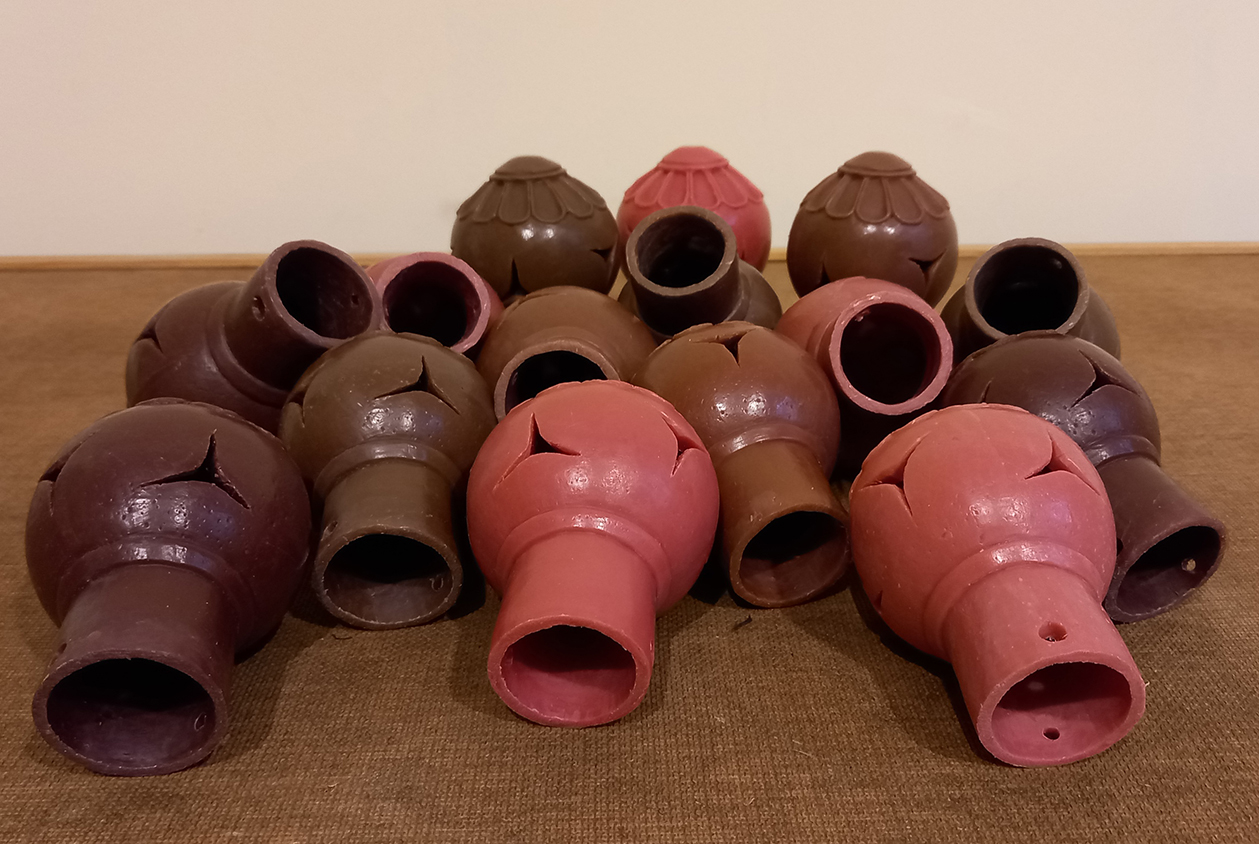
We’ve been glad to have them back out of the successful casting process, and all our worries have been in vain so, one more step forward.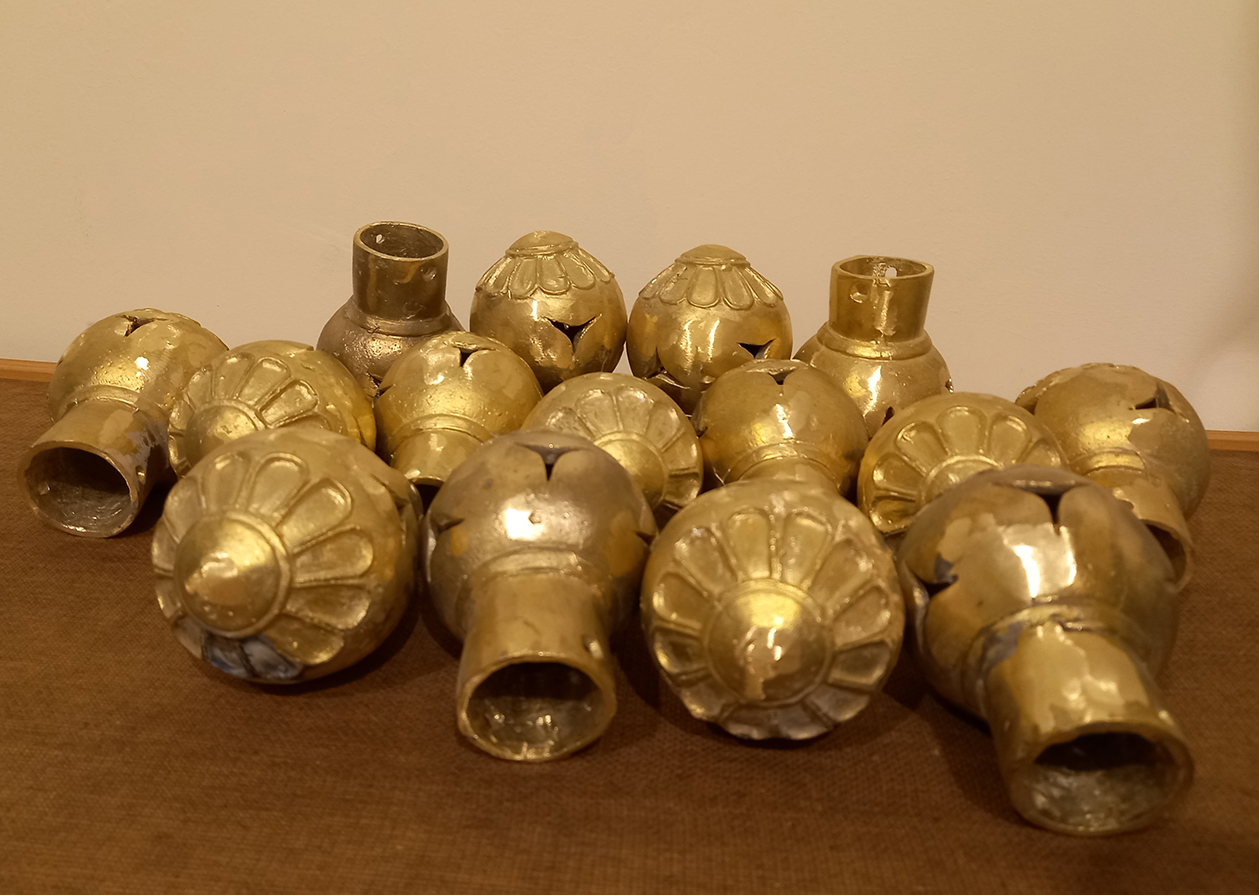
After that the rough rasp file was done, last step – polishing, shining, and this is the final result. Now they are shining in a divine bright way, like they are made of gold!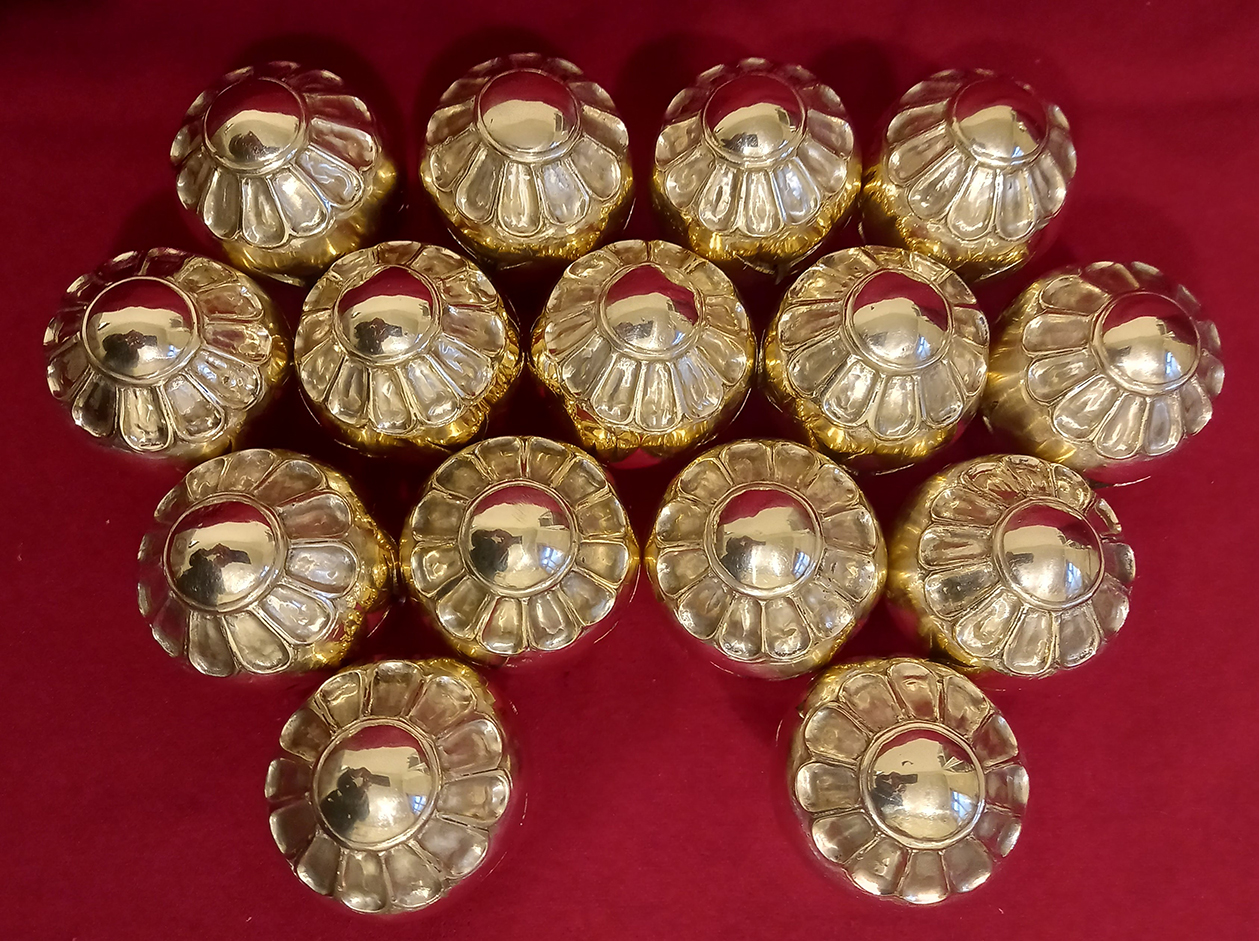
Thinking that the story of Cyrus the Great and princes Tomiris is so ancient back in time, but it is not. Actually Cyrus II of Persia lived and ruled in 600–530 BC.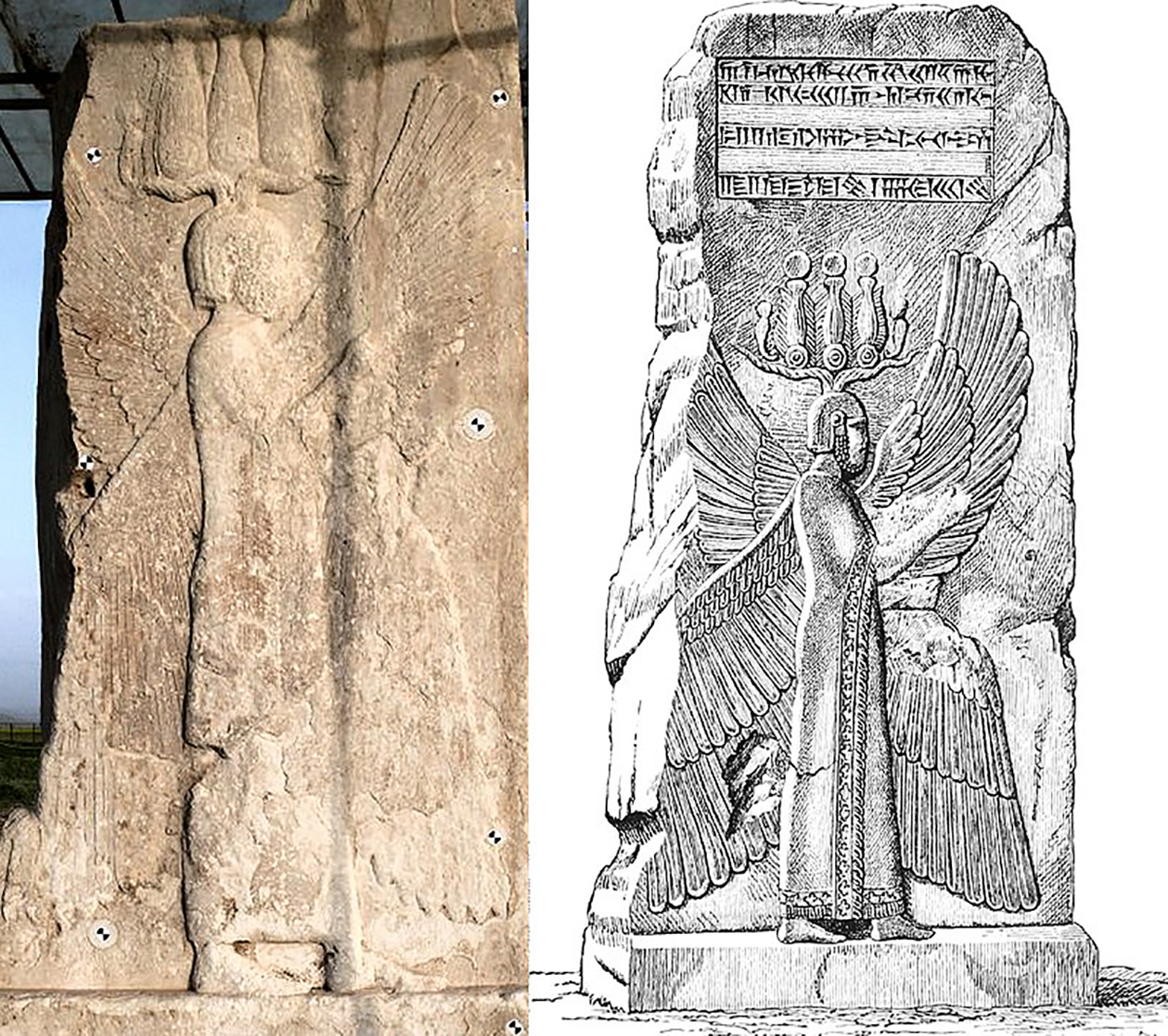
en.wikipedia.org/
This is the Archaic period we have enough experience to re-enact, especially if we take in to account that a few years after the death of Cyrus the Great, he was inherited by Darius I (550 – 486 BCE) who started the Greco-Persian Wars.
References
2011 Special Issue The Battle of Marathon (e)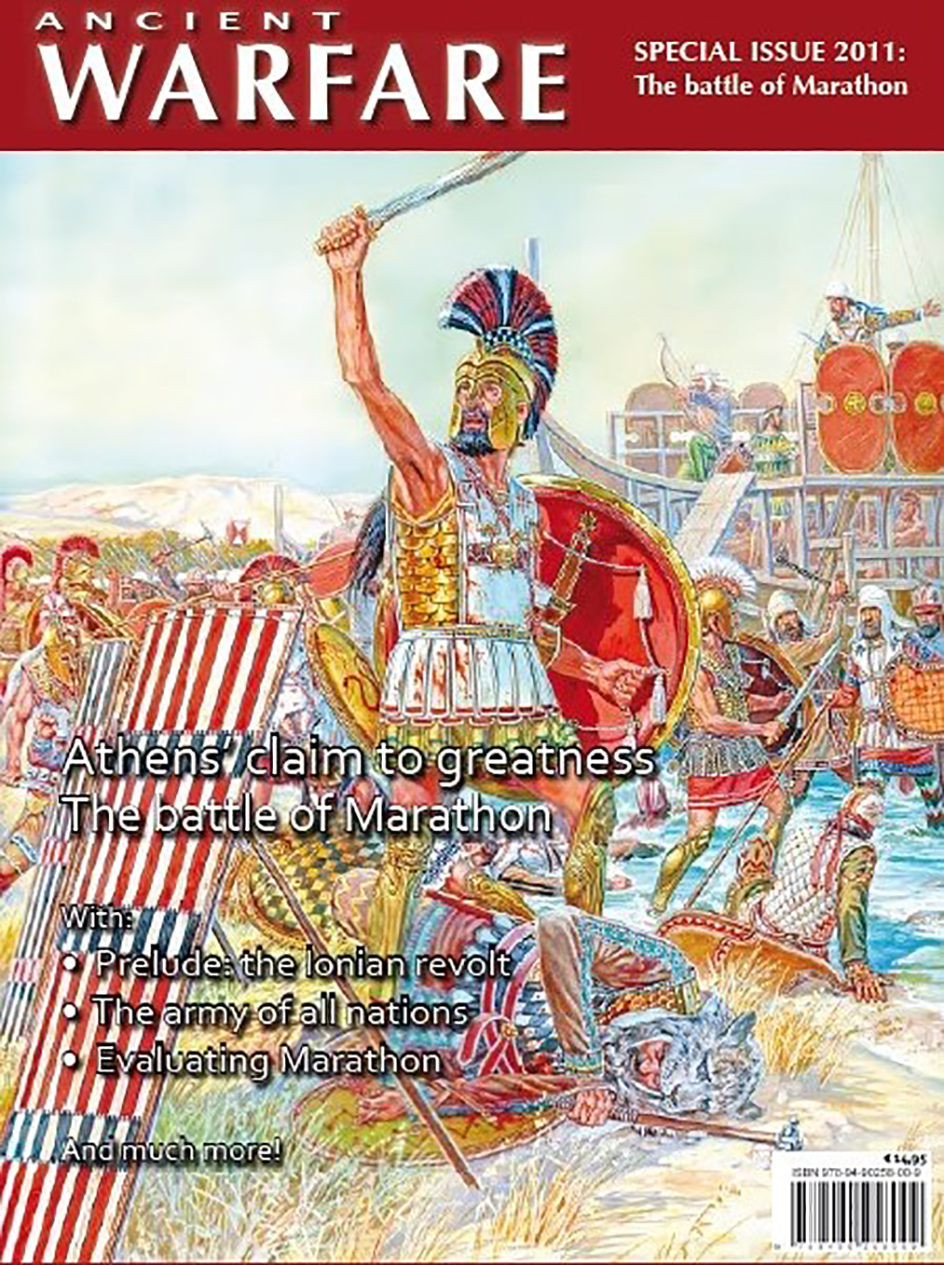
Satrap’s guard
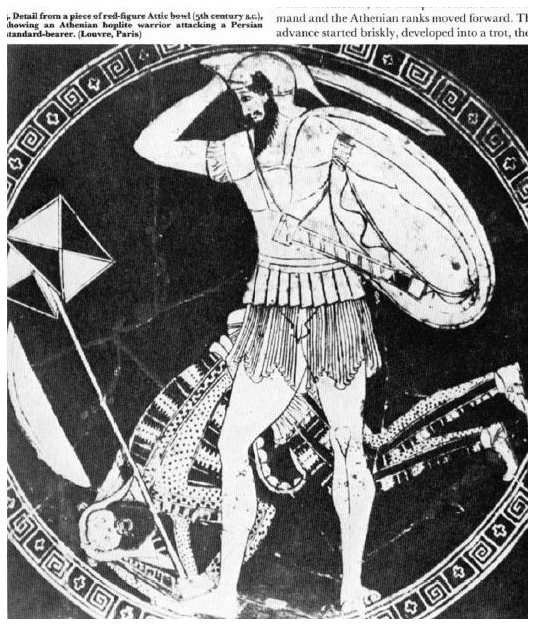
Based on a description of the march of Xerxes’ personal guard during the expedition to Greece and an analysis of monumental reliefs from the palace complex in Persepolis, it can be surmised that the royal guard (copied by the satraps) formed two onethousand- strong elitist infantry units (royal shield-bearers called arštibara in Persian or doriphoroi in Greek, and sometimes, from the shape of the spear-butts, melophoroi, “apple-bearers”), and a detachment of guard veterans occasionally referred to as the “royal archers”. They had colorful uniforms, while the spear-butts of their weapons were the same as those of the officers of the ‘Immortal’ guards.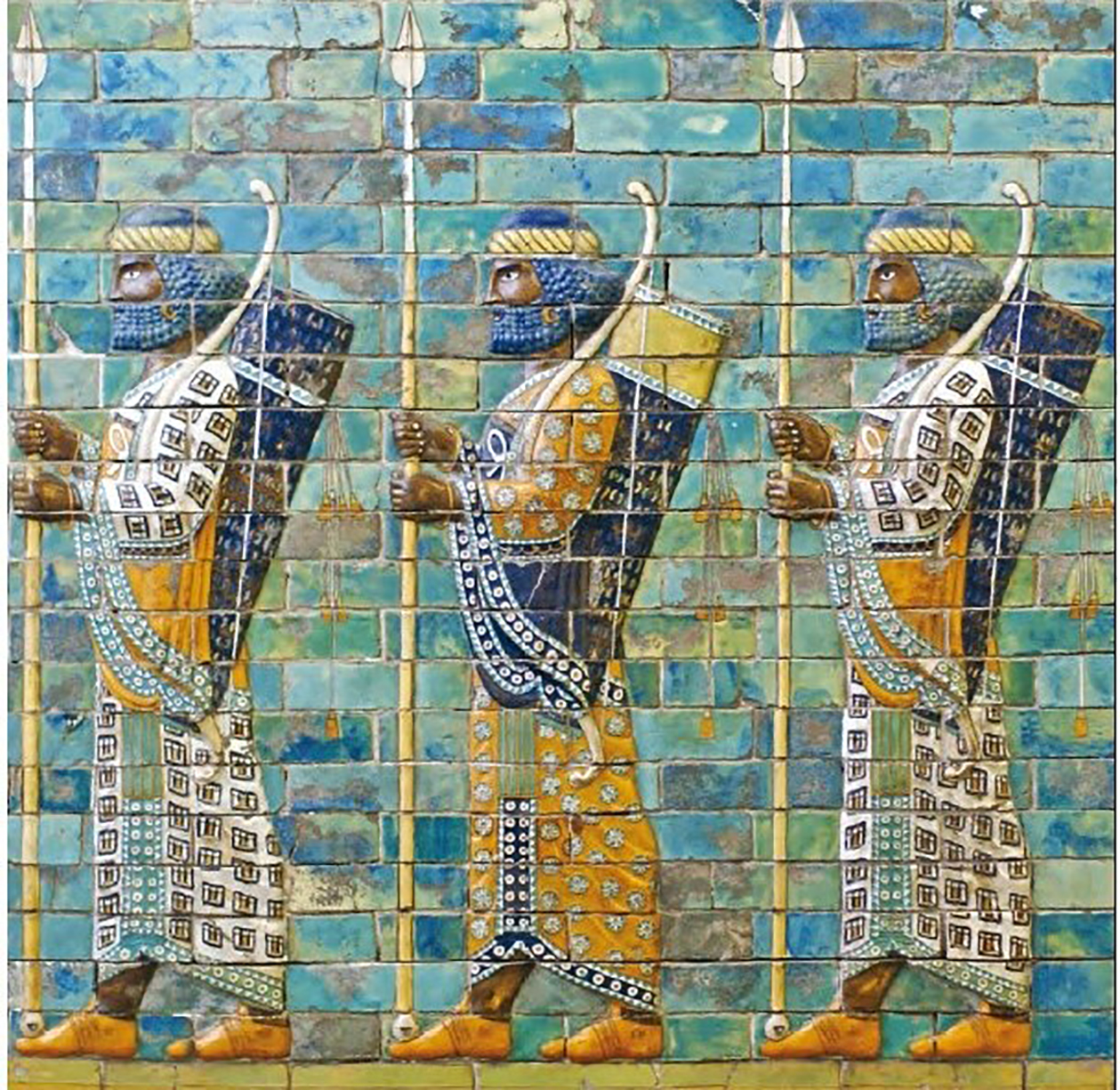
Detail of one of the reliefs from the palace of Darius I at Susa, showing the pomegranateshaped
spear-butt, similar to the round, apple-shaped spear-butts of other guardsmen.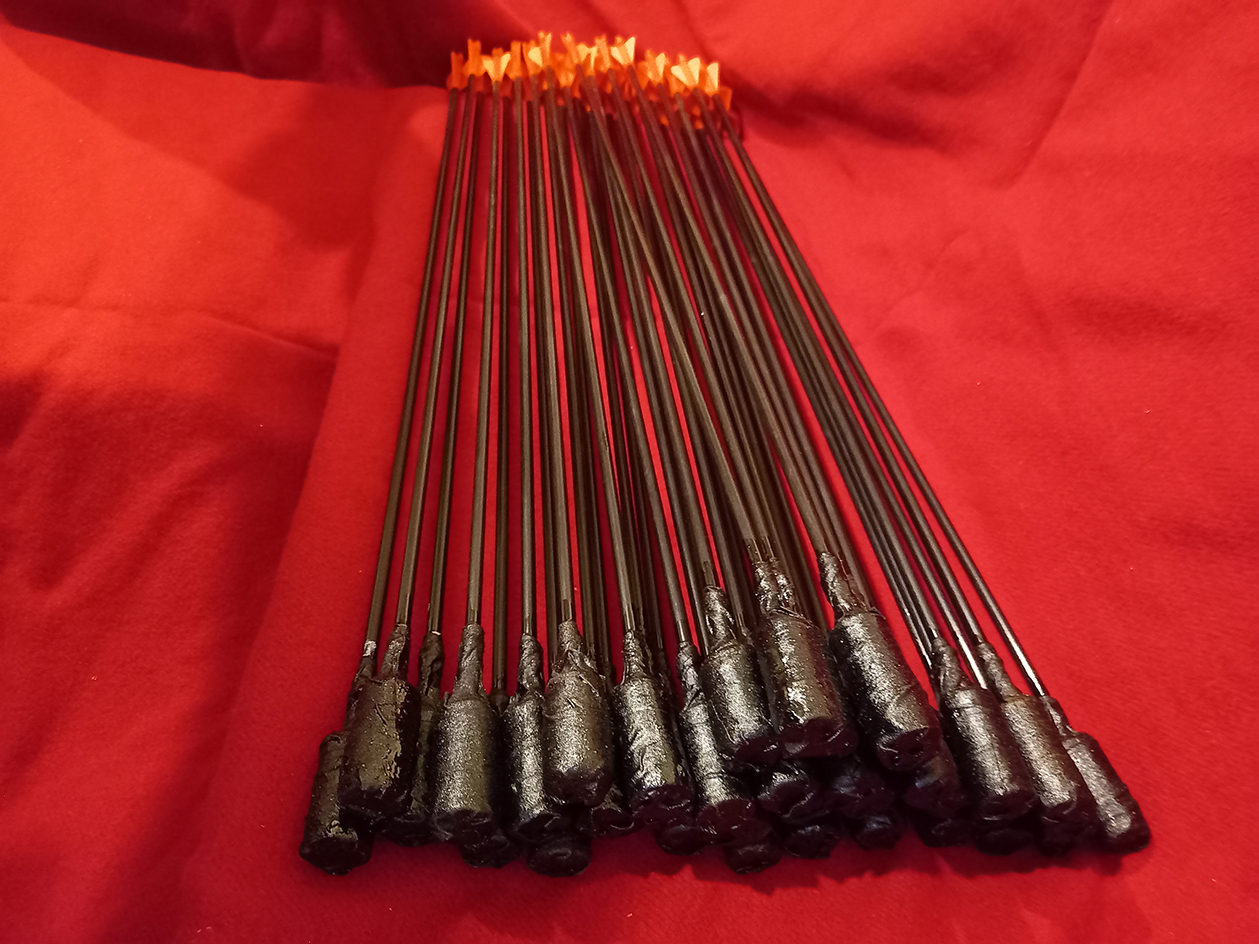
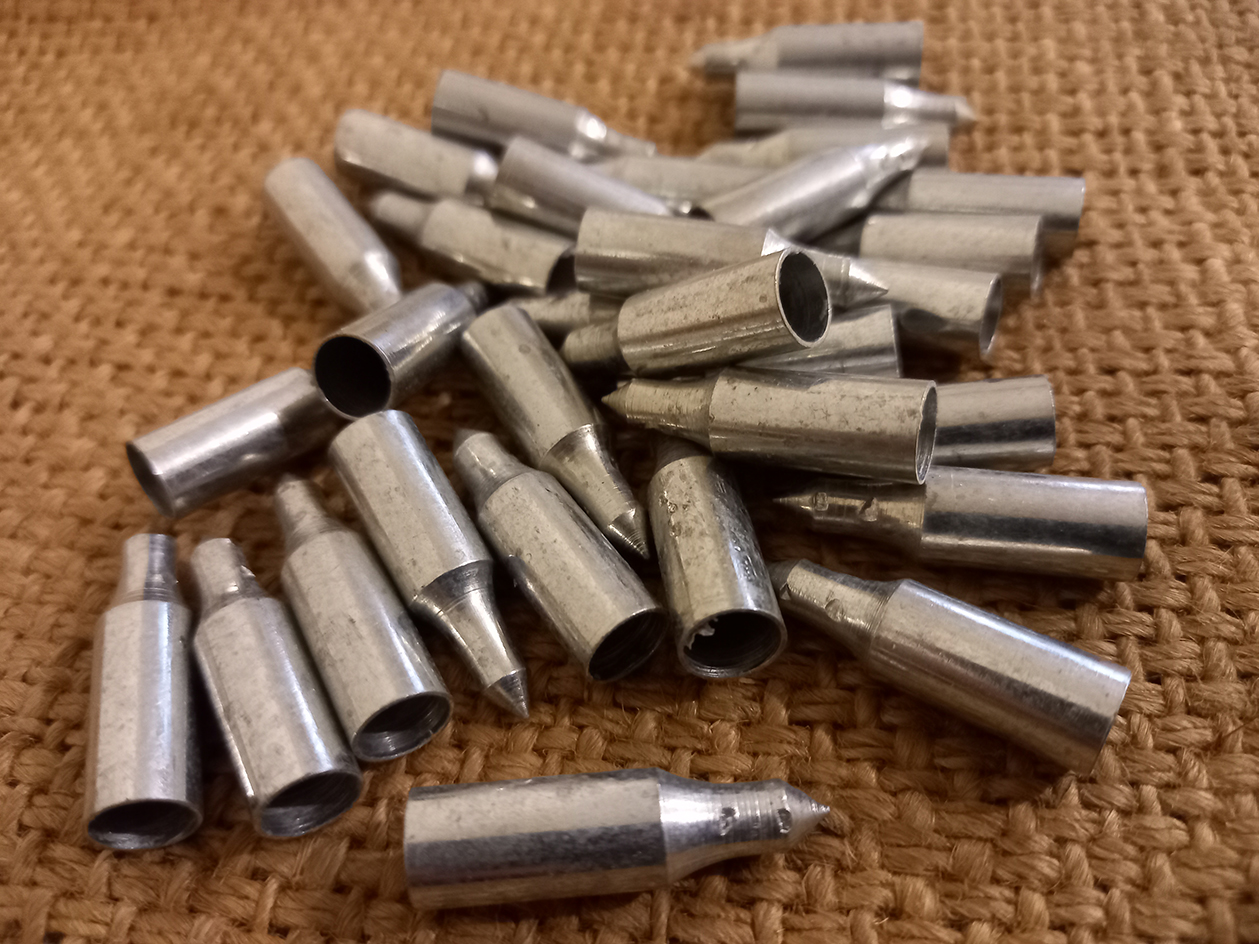
Good addition in our store of more than 40 new (save arrows). They are ready, after we remove the metal sharp blades and exchange them with cork ends.
Actually safe shooting arrows are a very demanding and attractive addition on the re-enacting battlefield. Unfortunately, many of them go waist after the shooting as some of them simply get lost or have been stamped down -damaged badly. This is always a big loss because it is not cheap and not easy to supply so many arrows, simply losing them.
ANCIENT HELLENIC MILITARY COMMANDS
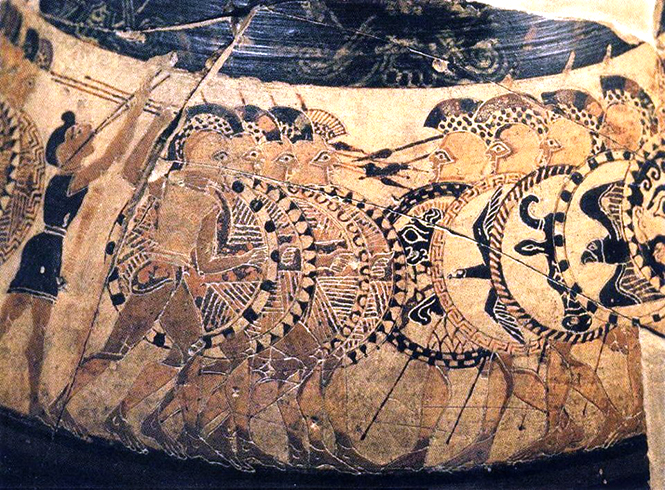
Hoplites Military Commands
PROSOCHI – Attention
Grammas Cosmete – Dress ranks
Epi Dory Kline – Turn to your right 1 person
Epi Dory Klinate – Turn to your right meny persons
Epi Aspida Kline – Turn to your left 1 person ...
THRACIAN-HELLENIC
GEAR
